
Global buyers need more than attractive packaging. They need Resealable Packaging Bags that protect products, support efficient shipping, and perform consistently across different markets. A zipper that closes smoothly, a strong side seal, and a clear product window can influence both customer satisfaction and repeat purchases.
Philip Kotler, a leading marketing authority, said, “Packaging is the fifth P of marketing.” His observation remains practical today. Packaging communicates quality before customers open the product. For global sourcing teams, however, appearance is only one consideration. Material structure, barrier performance, bag thickness, closure strength, printing accuracy, and production consistency require careful evaluation.
Small details matter.
This guide examines the top Resealable Packaging Bags for global buyers, including stand-up pouches, flat zipper bags, kraft paper options, clear PE bags, and custom printed formats. Each type offers different advantages for food, household goods, personal care items, and general retail products. The best choice depends on product sensitivity, filling equipment, storage conditions, shipping distance, and market expectations.
Real purchasing decisions are rarely perfect. A thicker bag may improve protection but increase freight weight. A premium finish may attract shoppers but raise minimum order quantities. Some suppliers promise strong seals, yet samples can reveal uneven zippers or weak corners. Buyers should test actual samples, review technical specifications, and confirm production controls before placing large orders.
This practical comparison highlights useful strengths, overlooked limitations, and questions buyers should ask. No bag fits every product. Careful judgment still matters.
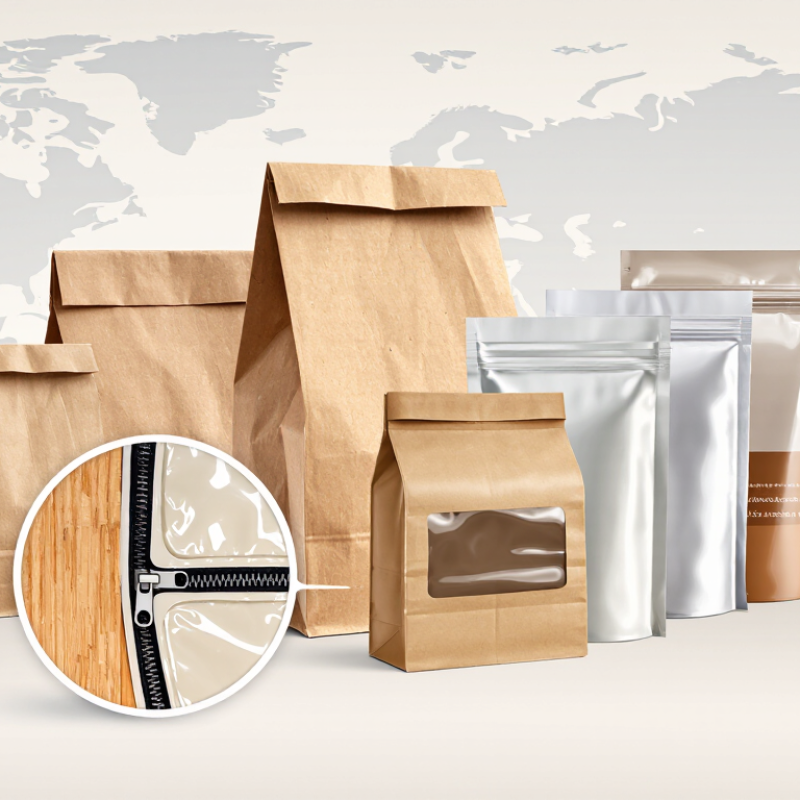
Top Resealable Packaging Bags for Global Buyers
What Resealable Packaging Bags Are and How They Work
Resealable packaging bags are flexible pouches designed to open and close repeatedly. They usually combine film layers with a zipper, press-to-close profile, or sliding closure. The film provides a barrier against moisture, dust, light, or air. The closure helps users access the contents without replacing the entire package. A good seal should feel even across the opening. Simple in practice.
Pressing the zipper tracks together creates a continuous mechanical seal. Some closures use interlocking ridges, while others depend on a firm pressure fit. When users pull the tracks apart, the bag opens without tearing the main film. Many bags include a tear notch for the first opening. After that, the resealable feature becomes the working closure. The seal is not always airtight.
Material selection affects performance. Polyethylene offers flexibility, while laminated structures can improve barrier protection and stiffness. For products sensitive to humidity, buyers should inspect seal strength, film thickness, and closure alignment. A practical test includes repeated opening, closing, dropping, and storage under changing temperatures. Weak points often appear near the corners. That detail is easy to miss.
Global buyers should also check dimensions, filling tolerance, print accuracy, and carton protection during transport. A bag may look reliable but fail when overfilled. Repeated use can wear the zipper, especially when fine particles enter the track. I would avoid judging quality from appearance alone. Sample testing remains necessary, and even a careful specification may need revision after real handling.
| Resealable Bag Type | Typical Material Structure | Common Capacity Range | Resealing Mechanism | Barrier Performance | Typical Applications | Main Advantages | Key Purchasing Considerations |
|---|---|---|---|---|---|---|---|
| Stand-Up Zipper Pouch | PE, PET/PE, or laminated multilayer film | 100 g to 2 kg | Press-to-close zipper, often combined with a heat-sealed top | Low to high, depending on the laminate and optional barrier layer | Snacks, dried fruit, pet treats, powders, and household products | Self-standing display, efficient shelf use, lightweight construction, and convenient repeated opening | Check pouch stability, zipper strength, seal width, gusset design, and filling-line compatibility |
| Flat Zipper Pouch | PE or laminated PET/PE film | 20 g to 500 g | Integrated press-to-close zipper below the top seal | Low to medium; higher barrier is available with laminated films | Seasonings, seeds, small hardware, confectionery, and sample packs | Low material consumption, compact storage, and economical shipping | Review zipper alignment, opening force, film thickness, and the usable internal volume |
| Slider Zipper Pouch | PE, PET/PE, or multilayer laminated film | 250 g to 5 kg | Sliding plastic zipper that guides the closure track together | Medium to high when combined with suitable barrier films | Large food packs, pet food, laundry products, and gardening materials | Easy to operate, even with gloves or limited hand dexterity | Test slider durability, closure integrity, handle design, and resistance to rough transport |
| Foil-Laminate Zipper Pouch | PET/aluminum foil/PE or PET/metallized film/PE | 50 g to 2 kg | Press-to-close zipper protected by a heat-sealed upper edge | High protection against light, oxygen, and moisture | Coffee, nutritional powders, spices, pharmaceuticals, and sensitive ingredients | Strong aroma retention and improved protection for oxygen- and light-sensitive contents | Confirm pinhole resistance, seal quality, food-contact compliance, and disposal requirements |
| Vacuum Zipper Bag | PA/PE or other high-strength multilayer coextruded film | 250 g to 5 kg | Heavy-duty zipper combined with vacuum sealing through the top opening | High mechanical strength; barrier depends on the selected film | Meat, seafood, cheese, prepared foods, and sous-vide products | Removes air, reduces package volume, and helps limit exposure to oxidation | Verify puncture resistance, vacuum retention, seal temperature, and compatibility with vacuum equipment |
| Child-Resistant Resealable Pouch | Multilayer plastic or foil-laminated film with a certified closure system | 10 g to 500 g | Special press-and-slide or squeeze-and-slide closure | Medium to high, depending on the film structure | Household chemicals, medicines, regulated products, and selected agricultural products | Combines repeated access with additional resistance to opening by young children | Require testing against the destination market's child-resistance regulations and closure standards |
| Spouted Resealable Pouch | PE, PET/PE, or multilayer barrier film with a molded spout | 80 ml to 2 L | Screw cap or tethered cap on a rigid spout | Low to high, depending on the pouch film and cap assembly | sauces, beverages, baby food, detergents, and liquid concentrates | Controlled dispensing, reduced packaging weight, and convenient resealing | Check cap torque, leak resistance, spout dimensions, filling method, and liquid compatibility |
| Kraft Paper-Laminated Zipper Bag | Paper outer layer with PE, metallized film, or foil inner laminate | 50 g to 1 kg | Press-to-close zipper with a heat-sealed top | Medium to high, depending on the inner barrier layer | Tea, coffee, granola, bakery products, gifts, and dry foods | Paper appearance, good printability, and a premium tactile presentation | Confirm moisture barrier, paper sourcing, recycling instructions, and resistance to scuffing |
| Recyclable Mono-PE Zipper Pouch | Polyethylene-based mono-material film and PE zipper | 50 g to 2 kg | Press-to-close zipper | Low to medium; enhanced grades can provide improved moisture and oxygen protection | Dry foods, pet treats, personal-care refills, and household products | Designed to support polyethylene recycling streams where accepted by local infrastructure | Check local recycling availability, film qualification, zipper compatibility, and labeling rules |
| Slider Bag with Handle | PE or multilayer coextruded film with a reinforced top section | 1 kg to 10 kg | Slider zipper with an integrated carry handle | Low to medium, with optional barrier layers | Bulk pet food, dry ingredients, cleaning products, and industrial components | Supports repeated handling and improves portability for larger pack sizes | Test handle load strength, zipper performance after repeated use, and drop resistance |
They are flexible pouches that open and close repeatedly. A zipper or press-to-close profile creates the reusable seal.
Interlocking tracks press together and form a mechanical seal. Pulling them apart opens the bag without tearing the main film.
Not always airtight. The seal may reduce air movement but still allow small leaks. Test filled samples before making claims.
Polyethylene usually provides flexibility. Laminated films can improve barrier protection, stiffness, and resistance to moisture, light, or air.
Open and close filled samples at least twenty times. Inspect gaps, wrinkles, and particles trapped inside the tracks.
Check corners, zipper alignment, film thickness, and overfilled areas. Weak corners often appear after dropping or repeated handling.
Compare samples during filling, transport, storage, and daily use. Measure thickness at several points, not only the stated average.
Use strong cartons, internal liners, and moisture protection for long sea routes. Confirm pallet sizes and loading plans early.
Request material details, recent laboratory reports, batch records, and quality certificates. Requirements vary by destination and product type.
Cheap bags may create damaged stock, complaints, and additional waste. Cost per usable bag gives a more realistic comparison.
Resealable Packaging Bags are flexible containers designed with closures such as zip seals, press-to-close tracks, or adhesive strips that allow users to open and reseal them repeatedly. They help protect products from moisture, air, dust, and spills while supporting convenient storage and portion control. Different formats serve different needs, including stand-up pouches for snacks and household goods, flat bags for documents or small items, vacuum bags for extended freshness, and specialized barrier bags for products sensitive to light or humidity.
Global buyers typically evaluate bag quality through seal strength, leak resistance, tear durability, clarity, print consistency, and ease of opening and closing. Common materials include polyethylene, polypropylene, polyester, aluminum-coated films, and multilayer structures selected for specific protection requirements. Successful international sourcing also requires attention to food-contact suitability where relevant, accurate product specifications, responsible packaging practices, export documentation, carton efficiency, and shipping conditions. Careful comparison of performance, compliance, customization, and total landed cost helps buyers choose reliable packaging for diverse markets.
