
Finding the right China food pouch packaging supplier takes more than comparing prices. Food Pouch Packaging must protect the product, run smoothly on filling equipment, and arrive with specifications buyers can verify. A pouch that looks sturdy on a sample table may behave differently on a fast production line. Small details matter.
This guide introduces supplier types, common pouch formats, and practical checks for international buyers. It considers material structure, sealing performance, print quality, order quantities, lead times, and communication. Ask for product data sheets and samples, then test them under conditions close to your actual filling process. A clear answer is useful; a measured answer is often more trustworthy than a sweeping promise.
There is no single supplier that fits every project. A startup testing a stand-up pouch may need flexibility, while a large brand may prioritize repeatable output and planned capacity. Buyers should also confirm which quality documents apply to their product and destination, rather than assuming one certificate covers every need. That takes time. It is worth it. This overview offers a grounded starting point for comparing Chinese suppliers, spotting unanswered questions, and making a more informed shortlist. Even careful research has limits, so verify important claims directly before placing an order.
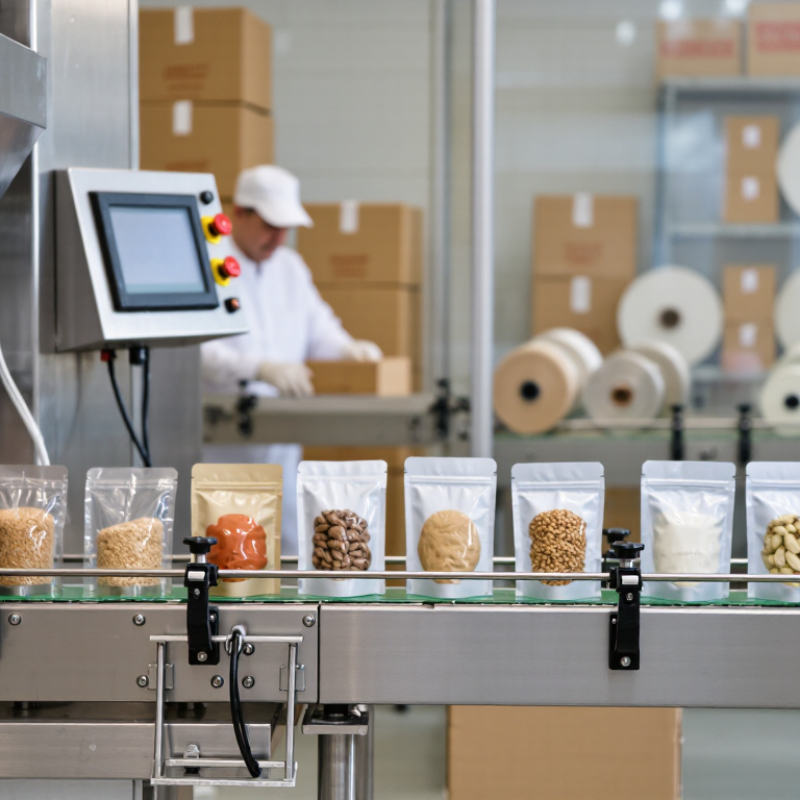
China’s food pouch packaging supplier market includes large-scale manufacturers, specialist converters, and trading companies with varied production capabilities. Many suppliers offer stand-up, flat-bottom, and three-side-seal pouches, with options such as zippers, tear notches, and clear product windows. Materials and barrier structures can be tailored to a food’s sensitivity to moisture, oxygen, and light.
Customization is common, but production strengths differ. One factory may handle printed laminates efficiently, while another may be better suited to smaller trial orders or pouch forming. Details matter. Buyers can compare sample quality, print alignment, seal consistency, and lead times before placing larger orders. Ask how suppliers inspect incoming films and finished seals, and request relevant test records for the intended product and destination market.
A neat sample is useful, but it does not reveal every production risk. Confirm minimum order quantities, artwork approval steps, change-control procedures, and how defects are recorded. Communication can also be uneven; a detailed specification helps reduce misunderstandings. Not every supplier will provide the same level of evidence, so comparisons should focus on documented capabilities rather than price alone. Some questions may feel repetitive, yet they often expose gaps early.
| Market Dimension | Market Overview | What Global Buyers Should Check |
|---|---|---|
| Common pouch formats | Food packaging suppliers commonly produce stand-up pouches, flat pouches, three-side-seal pouches, spouted pouches, and rollstock for form-fill-seal equipment. | Match the format to the product, filling process, shelf presentation, and required opening or reclosing features. |
| Typical food applications | Pouches are used for products such as snacks, dried foods, coffee, sauces, seasonings, frozen foods, and ready-to-eat meals. The required structure depends on the product and processing conditions. | Specify whether the product is dry, oily, acidic, frozen, hot-filled, pasteurized, or retort-processed. These conditions affect material and seal requirements. |
| Packaging materials | Flexible pouches may use single-layer or laminated structures made from materials such as polyethylene (PE), polypropylene (PP), polyester (PET), and aluminum foil. Barrier needs vary by product. | Request the proposed layer structure and confirm its suitability for the food, filling temperature, storage conditions, and intended shelf life. |
| Barrier performance | Barrier layers or coatings can help limit the transmission of oxygen, moisture, light, or aroma, depending on the material construction. No single structure is suitable for every food. | Set measurable requirements where needed, such as oxygen or water-vapor transmission, and ask for test methods and supporting reports. |
| Food-contact compliance | Requirements depend on the destination market and the materials used. Examples include applicable U.S. food-contact regulations and the EU framework for materials intended to contact food, including specific rules for plastics. | Identify every destination country before production. Request relevant declarations, composition information, and test documentation for the finished packaging. |
| Printing and artwork | Flexible packaging can support printed graphics and product information. Print processes and available finishes depend on the supplier’s equipment and the selected structure. | Approve a final proof, check language and mandatory labeling with local specialists, and confirm color expectations, print position, and artwork ownership. |
| Sealing and functional features | Options may include tear notches, zip closures, hang holes, transparent windows, and spouts. Seal performance depends on pouch design, materials, and filling conditions. | Test samples on the intended filling line and evaluate seal integrity, opening behavior, closure performance, and leakage under expected handling conditions. |
| Customization and order planning | Custom dimensions, structures, printing, and features typically require technical review and production planning. Minimum order quantities and lead times vary by supplier and specification. | Request written quotations covering order quantity, tooling or plate charges, sample approval, production lead time, and terms for repeat orders. |
| Quality assurance | Relevant production checks may include dimensions, print quality, seal strength, appearance, and agreed material properties. Inspection scope varies among suppliers. | Agree on product specifications, sampling and acceptance criteria, inspection records, traceability information, and procedures for nonconforming goods. |
| Shipping and import planning | Finished pouches and printed rollstock are shipped as packaging goods; freight method, packing configuration, and delivery schedule affect landed cost and arrival timing. | Confirm carton or roll dimensions, gross weight, export documents, shipping terms, delivery address, and any destination-specific import requirements. |
The supplier should consider the food, filling temperature, transport, and storage time. Dried snacks may need moisture protection. Liquid foods often need stronger seals.
Request production pouches, seal-strength results, and checks for pinholes or uneven edges. Samples matter. A polished mock-up may not reflect factory output.
A trial can reveal wrinkles, slow filling, or seals that need adjustment. Small flaws show. A specification sheet may miss them.
Share confirmed drawings and dimensions. Ask whether the supplier can adapt pouch shapes, spouts, or tear notches to the existing equipment.
Ask about incoming material checks, inspection frequency, batch traceability, and defect handling. Confirm which checks apply to the exact pouch structure.
Request relevant test records and ask how results were measured. Check whether records link to production lots. Evidence is better than a confident answer.
Compare minimum order quantities, lead times, payment terms, and repeat-order capacity. Setup fees or inconsistent delivery can change the real cost.
No. A review can help, but it cannot guarantee every shipment. Agree on specifications and a practical defect-handling process before ordering.
China’s Food Pouch Packaging supplier market serves a wide range of global buyers, from small businesses to large food producers. Suppliers commonly offer stand-up, flat, spouted, and retort pouches, using materials such as polyethylene, polypropylene, polyester, aluminum foil, and recyclable or mono-material structures. Options vary in barrier performance, durability, appearance, and suitability for different food products and filling processes.
Leading suppliers may provide custom printing, pouch design, material selection, sampling, and production support. Buyers can compare suppliers by checking product specifications, manufacturing capacity, communication, lead times, sample quality, and experience with similar orders. Before purchasing, confirm that materials meet the intended food-contact requirements and review relevant quality-management documentation, test reports, and certifications. Importers should also verify packaging, labeling, shipping, and customs documentation requirements for their destination market to help ensure a reliable and compliant supply process.
