How to Choose Resealable Bags for Packaging?

Time:2026-09-23 Author:Henry
0%

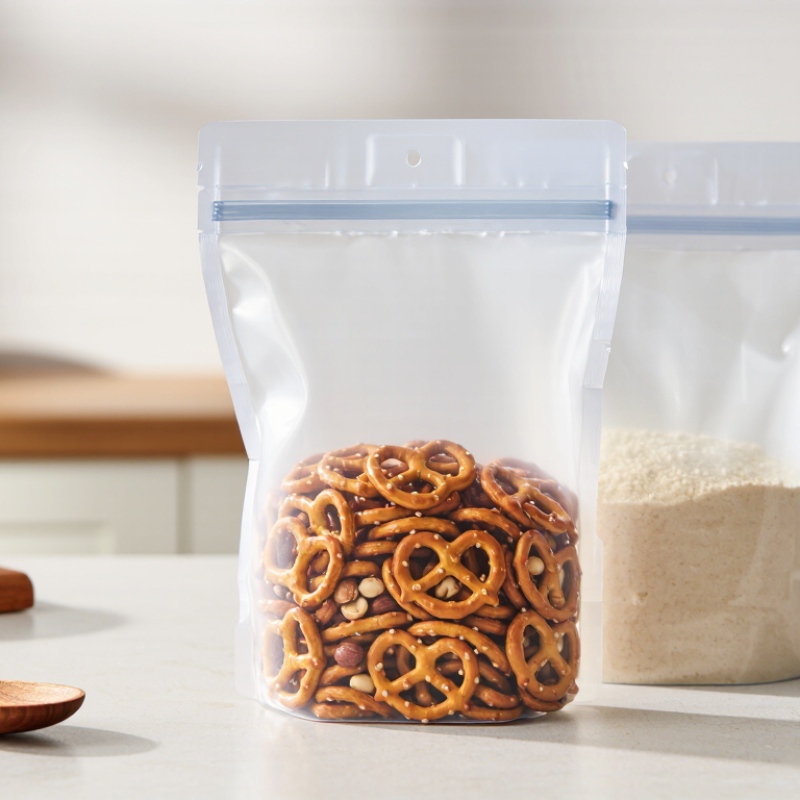
Choosing Resealable Bags For Packaging is not merely a matter of selecting a zipper and a printed film. The right bag must protect the product, support convenient reuse, and survive real handling from filling to delivery. Imagine a customer opening a pouch beside a kitchen counter. The seal should close cleanly, the film should resist tearing, and the product should remain visible or clearly identifiable. Small details matter.

Packaging expert Walter Soroka, author of Fundamentals of Packaging Technology, defines packaging as “the science, art, and technology of enclosing and protecting products for distribution, storage, sale, and use.” This principle gives our comparison a practical foundation. We will examine material structure, seal strength, moisture resistance, puncture protection, bag size, closure design, and labeling space. A bag for dry snacks may need a different barrier than one for powdered supplements or craft components. One solution cannot fit every product.

No bag is perfect.

A thicker film may improve durability, yet it can increase material use and cost. A strong zipper may protect freshness, but poor alignment can frustrate customers. These trade-offs deserve honest attention. Real selection also requires testing with the actual product, not just trusting a supplier’s sample. Check the seal after repeated opening, gentle squeezing, stacking, and transport. This guide will help buyers compare options with clearer judgment, while acknowledging an uncomfortable truth: attractive packaging can still fail when its daily use is ignored.
How to Choose Resealable Bags for Packaging?

Packaging Requirements and Product Protection Goals

How to Choose Resealable Bags for Packaging?

Packaging requirements should guide every resealable bag decision. Start with the product’s sensitivity to moisture, oxygen, light, dust, and handling. Dry snacks may need a strong moisture barrier, while fresh items require controlled airflow. Powders also need leak-resistant seals and clean inner surfaces. A bag that looks suitable may still fail during transport.

Product protection goals should be specific and measurable. Will the package prevent spills after repeated opening? Can it survive a short drop onto a warehouse floor? Check seal strength, film thickness, closure performance, and usable capacity. Leave enough headspace for closing without trapping product in the zipper. Sharp edges may puncture thin film. Heavy contents need reinforced construction.

I have found that practical testing reveals problems early. Fill sample bags, open them repeatedly, and store them in realistic temperature conditions. Then inspect the seal, corners, and printed information. Do not test only on a clean table. Test during packing and delivery. That is where weaknesses appear. A thicker bag is not always better; it may waste material or frustrate users. I once preferred a sturdy option that was difficult to reseal with wet hands. That choice needed reconsideration. Packaging teams should record test results and adjust the bag design when product or shipping conditions change.

Bag Materials, Thickness, and Barrier Performance

How to Choose Resealable Bags for Packaging?

Material selection controls more than appearance. Polyethylene offers flexible seals and good moisture resistance. Polypropylene improves stiffness and heat performance. PET adds strength, but usually needs a sealing layer. For oxygen-sensitive products, EVOH or aluminum foil can provide stronger protection. However, EVOH may lose performance in humid conditions. One material rarely solves every problem.

Thickness needs careful testing. A 70-micron pouch is not automatically safer than a 50-micron pouch. Seal strength, puncture resistance, and filling speed matter too. Barrier performance should be measured through oxygen transmission rate and water vapor transmission rate. Test results must match storage temperature and humidity. The OECD’s Global Plastics Outlook reports that packaging creates about 40% of global plastic waste. Reducing thickness can help, but weak seals create product loss. That trade-off deserves honest review. The Flexible Packaging Association reported approximately $39.8 billion in United States flexible packaging sales for 2023, showing the scale of this material choice.

Tips: Match the barrier to the product. Use high moisture protection for dried foods. Consider oxygen protection for coffee or nuts. Request ASTM-based OTR and WVTR testing. Check the zipper after repeated opening. A pouch that looks strong may still leak. Some laboratory results also fail to predict rough transport, so include drop and compression trials.

Closure Types, Resealing Strength, and Ease of Use

How to Choose Resealable Bags for Packaging?

Closure design determines whether a bag feels dependable or frustrating. Press-to-close zippers suit dry snacks, powders, and small parts. Slider closures offer faster operation and better alignment for frequent use. Hook-and-loop systems feel simple, but they may collect dust. The Flexible Packaging Association’s 2024 industry report valued U.S. flexible packaging sales at about $40.6 billion in 2023. That scale reflects strong demand, yet it does not make every closure suitable for every product.

Resealing strength needs practical testing. Open and close each sample repeatedly, then check the zipper under light compression. A good closure should resist accidental opening without requiring excessive finger pressure. Test contaminated tracks too. Crumbs, oil, and fine powder can reduce engagement. ASTM D3078 can help detect gross leaks, although it does not fully measure consumer usability. A drop test adds useful evidence. Real handling is rarely gentle.

Ease of use is often overlooked. Look for a clear tactile click, visible alignment, and enough grip above the zipper. A small pull tab helps users with wet hands or reduced dexterity. During trials, record opening force, cycle count, and failed seals. Keep the results. One weakness remains: laboratory testing may not represent rushed household use. A closure can pass ten cycles and still annoy someone on the eleventh. Choose the weakest feature carefully.

How to Choose Resealable Bags for Packaging?

Closure Types, Resealing Strength, and Ease of Use

Scores use a five-point comparative scale based on the general performance characteristics of common resealable bag closures. Slider zippers typically provide the strongest resealing performance, while press-to-close zippers offer the greatest ease of use. Adhesive-strip closures are convenient for limited reuse but are less suitable for repeated opening and closing.

Size, Shape, Printing, and Customization Options

How to Choose Resealable Bags for Packaging?

Size and shape should follow the product, not only the shelf display. Measure the product volume, headspace, and filling tolerance before selecting dimensions. A flat pouch suits powders and snacks, while a stand-up pouch supports liquids and wider openings. Leave enough room above the zipper for reliable sealing. Too much empty space can increase material use and shipping volume.

The Flexible Packaging Association reported that the United States flexible packaging market reached approximately $40.5 billion in 2023. This scale shows why small design decisions can affect cost and material efficiency.

Printing should make key information readable at a glance. Use strong contrast for product names, directions, and warning details. Matte finishes feel softer, while glossy surfaces create stronger shelf reflections. Test both under retail lighting. Custom options may include zipper colors, tear notches, rounded corners, windows, handles, and barrier films. Barrier selection depends on oxygen, moisture, light, and aroma sensitivity.

Smithers’ global flexible packaging research identifies barrier performance as a continuing packaging development priority through 2028.

Do not over-customize. Complex artwork can increase setup time and create color variation between production runs. I have seen attractive samples fail because the zipper felt weak or the pouch tipped easily. Request physical prototypes and test filled bags, not empty ones. Check seal strength, drop resistance, opening force, and print rub resistance. A practical design may look less dramatic, but it often performs better. Recheck every assumption.

Safety, Sustainability, Cost, and Supplier Selection

How to Choose Resealable Bags for Packaging?

Safety should guide every packaging decision. Choose materials suited to the product, temperature, moisture, and storage period. For food or sensitive goods, request food-contact documentation and migration test results. A reliable supplier should provide batch records, material specifications, and sealing guidance. Test the zipper repeatedly. A bag that closes once may fail during transport.

Sustainability requires more than choosing a “green” label. Lightweight, mono-material bags can improve recyclability, but local recycling systems may not accept them. Recycled content can reduce virgin plastic use, yet it may affect clarity, strength, or product protection. Measure the actual packaging weight and avoid oversized bags. Small changes matter. I have seen attractive sustainable options create more waste when weak seals caused product damage. The best choice depends on real performance, not appearance.

Tips: Compare total cost, not only unit price. Include freight, storage, rejected units, and potential leakage. Request samples from at least two suppliers, then test them with your actual product. Check seal strength, puncture resistance, odor transfer, and reopening performance. Ask about minimum order quantities and production lead times. A lower price can become expensive when delivery is inconsistent. Supplier audits are useful, but they are not perfect. Keep written quality standards, inspect incoming batches, and review supplier performance regularly.

How to Choose Resealable Bags for Packaging? - Safety, Sustainability, Cost, and Supplier Selection

Evaluation Dimension Recommended Specification or Benchmark Why It Matters Typical Options Selection Check
Product Safety Use packaging materials and inks suitable for the intended product and market; request migration and compliance documentation. Food, pharmaceutical, cosmetic, and chemical products may have different safety and regulatory requirements. Food-contact polyethylene or polypropylene films; certified multilayer structures for higher barrier needs. Confirm declarations of compliance, test reports, ink specifications, and intended-use limitations.
Closure Performance The zipper should open and close smoothly and maintain a continuous seal after repeated use. A weak or misaligned closure can cause leakage, moisture uptake, contamination, and product waste. Press-to-close zipper, slider zipper, child-resistant closure, or tamper-evident feature. Test at least 30 open-and-close cycles using the actual product and filling conditions.
Moisture Barrier Select a low water-vapor-transmission structure when packaging powders, snacks, dried foods, or hygroscopic products. Moisture can reduce shelf life, cause clumping, and affect texture or product performance. PE or PP for general protection; coated or laminated structures for stronger barrier performance. Request water vapor transmission rate data at a stated temperature and relative humidity.
Oxygen and Aroma Barrier Use a high-barrier film when oxidation, aroma loss, or odor transfer can reduce quality. Oxygen exposure may cause rancidity, color changes, nutrient loss, or flavor deterioration. Polyolefin structures for moderate needs; barrier laminates or coated films for demanding applications. Compare oxygen transmission rate, aroma retention, and shelf-life test results.
Material Structure Choose the simplest structure that meets performance, safety, and shelf-life requirements. Single-material structures are generally easier to sort and recycle than mixed-material laminates where suitable collection exists. PE, PP, paper-plastic laminate, metalized laminate, or other multilayer structures. Ask whether the finished bag is compatible with the recycling system in the target market.
Sustainability Prioritize source reduction, right-sized packaging, recyclable designs, and verified recycled or renewable content where appropriate. Lower material use and practical end-of-life options can reduce environmental impact, but claims must match local infrastructure. Lightweight mono-material bag, bag with recycled content, certified compostable structure, or reusable format. Request material composition, recycled-content evidence, recyclability guidance, and disposal instructions.
Mechanical Strength Set minimum puncture, tear, tensile, and seal-strength requirements based on product weight and handling conditions. Adequate strength reduces product loss during filling, transport, warehousing, and consumer use. Standard film for lightweight goods; reinforced or thicker structures for sharp, heavy, or abrasive products. Conduct drop, compression, vibration, and seal-integrity tests on filled bags.
Temperature Range Specify the required filling, storage, freezing, heating, and transport temperatures before selecting the film. Plastic properties and seal performance can change significantly at low or high temperatures. Standard ambient-use film; freezer-grade structure; heat-resistant structure for approved applications. Verify the supplier’s stated temperature limits with product-specific testing.
Cost Structure Evaluate total cost rather than unit price alone: material, printing, tooling, filling speed, freight, waste, and returns. A cheaper bag may create higher costs through failures, overpacking, slower production, or product damage. Stock sizes generally reduce setup cost; custom sizes may reduce material waste at higher volumes. Compare landed cost per filled bag and include minimum order quantity, tooling, and freight charges.
Print and Labeling Ensure print adhesion, legibility, barcode readability, and resistance to rubbing, moisture, and handling. Unreadable labels can create compliance, traceability, inventory, and customer-service problems. Unprinted bag with label, flexographic printing, digital printing, or rotogravure printing. Approve a production-like proof and test barcode scanning after transport simulation.
Supplier Quality System Select a supplier with documented specifications, batch traceability, inspection procedures, and corrective-action controls. Consistent production quality is essential for reliable sealing, dimensions, appearance, and regulatory compliance. Supplier with documented quality management system, incoming-material controls, and final inspection records. Review sample inspection reports, certificates, change-control procedures, and complaint-response timelines.
Lead Time and Capacity Confirm sampling time, production lead time, monthly capacity, and contingency plans before placing an order. Unreliable supply can interrupt production and increase the need for emergency purchasing or air freight. Stock program for short lead times; custom printed production for planned recurring orders. Obtain written lead-time ranges and clarify how artwork, approvals, and raw-material shortages affect delivery.
Testing and Approval Approve the final bag using the actual product, filling equipment, closure method, and distribution route. Laboratory samples may not reflect real-world sealing, stacking, vibration, humidity, or consumer handling. Prototype testing, pilot filling, accelerated shelf-life testing, and transport simulation. Document pass/fail criteria for dimensions, seal strength, leakage, appearance, barrier, and closure performance.
Practical decision rule: Start with product safety and required barrier performance, then optimize material simplicity, bag size, closure reliability, total landed cost, and supplier capability. Sustainability claims should be verified against the disposal and recycling systems available in the intended market.

FAQS

What should guide the choice of a resealable bag?

Start with the product’s sensitivity to moisture, oxygen, light, dust, and handling. Dry snacks may need a strong moisture barrier. Fresh items may require controlled airflow. Powders need leak-resistant seals and clean inner surfaces. Appearance alone is not enough.

How can I check whether a bag protects the product?

Fill sample bags with the real product. Open them repeatedly and store them at realistic temperatures. Inspect seals, corners, film surfaces, and printed information. Add drop tests and transport simulations. A clean table hides weaknesses.

Which closure type is suitable for frequent use?

Press-to-close zippers work well for dry products and small parts. Slider closures may align faster during repeated opening. Hook-and-loop closures feel simple but can collect dust. Test closures with crumbs, oil, and fine powder. Clean tracks perform differently.

How strong should the resealing closure be?

The closure should resist accidental opening without excessive finger pressure. Test samples through many opening and closing cycles. Check performance under light compression and after minor contamination. Record failed seals and opening force. Ten successful cycles prove little.

What makes a resealable bag easy to use?

Look for a clear tactile click and visible alignment. Leave enough gripping material above the zipper. A pull tab can help users with wet hands. Test with different hand sizes and rushed movements. Laboratory comfort may not match household use.

How should I select the bag size and shape?

Measure product volume, filling tolerance, and required headspace. Flat pouches suit powders and many dry snacks. Stand-up pouches support wider openings and some liquid products. Leave space above the zipper for reliable sealing. Too much empty space wastes material.

What printing and customization details matter?

Use strong contrast for names, directions, and safety information. Check matte and glossy finishes under actual lighting. Possible features include windows, handles, tear notches, and rounded corners. Request physical prototypes before production. Empty samples can mislead.

How can I avoid choosing an attractive but weak design?

Test filled bags for seal strength, drop resistance, print rubbing, and tipping. Check sharp product edges against the film. Heavy contents may require reinforced construction. Complex artwork can increase setup time and color variation. A plain design may work better.

Conclusion

Choosing the right Resealable Bags For Packaging starts with understanding the product’s protection needs, including moisture, oxygen, light, odor, and contamination control. Consider the bag material, thickness, and barrier performance based on the product’s sensitivity, weight, shelf life, and storage conditions. The closure should provide reliable resealing strength while remaining easy for customers to open and close repeatedly. Different options, such as zipper or press-to-close systems, may suit different usage requirements.

Bag size, shape, and opening design should support efficient filling, storage, transport, and convenient handling. Printing and customization can improve product presentation while clearly displaying essential information. It is also important to evaluate safety, recyclability, material efficiency, production cost, minimum order quantities, and supplier reliability. A well-selected bag should balance protection, usability, appearance, sustainability, and budget while meeting appropriate packaging and product safety expectations.

Henry

Henry

Henry is a dedicated marketing professional with a profound expertise in the company's offerings. With years of experience in the industry, he possesses an impressive understanding of the market dynamics and consumer behaviors that drive success. Henry is committed to sharing his insights through......