Choosing Flat Pouch Packaging involves more than selecting an attractive film or convenient zipper. The pouch must protect the product, support efficient filling, and communicate quality within seconds. Packaging researcher Dr. Susan Selke offers a practical principle: “Good packaging protects the product while avoiding unnecessary material.” That idea provides a strong foundation for evaluating every pouch decision.
A useful review should examine ten details, including barrier performance, seal strength, pouch dimensions, opening behavior, filling equipment, print quality, storage conditions, and recyclability. A coffee pouch may need strong oxygen protection, while a dry snack pouch may prioritize easy tearing and resealing. Touch matters too. A soft matte surface can feel premium, but fingerprints may appear quickly under store lighting. Small issues become expensive when thousands of units reach the market.
The right Flat Pouch Packaging should match the product’s real journey. Consider warehouse stacking, shipping vibration, humidity, temperature changes, and repeated handling. Ask whether the zipper closes cleanly after crumbs enter it. Test whether the bottom gusset remains stable on a shelf. Do not trust appearance alone. A beautiful pouch can still suffer from weak seals or poor alignment.
Experience teaches a less comfortable lesson: the first design is rarely perfect. Test samples with actual filling speeds and realistic storage conditions. Compare supplier data with hands-on results. Confirm food-contact suitability, labeling requirements, and disposal guidance for the target market. Good packaging is not simply attractive. It is dependable, measurable, and honest about its limitations.
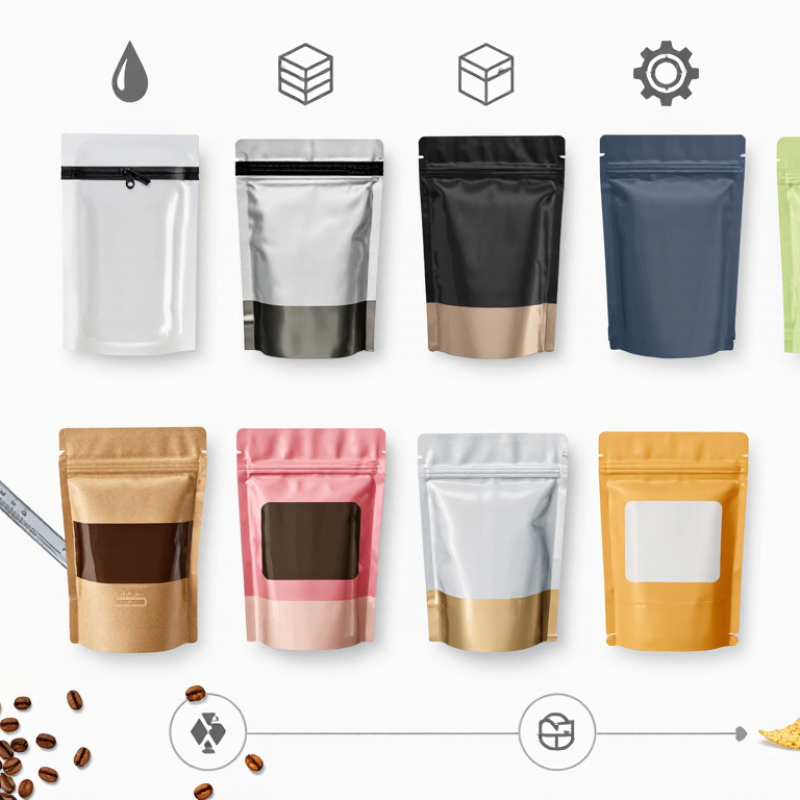
Tip 1: Start with the product, not the pouch shape. Define its weight, texture, moisture level, and sensitivity to oxygen or light. Powder, sauce, and dry snacks require different barrier properties. A 250-gram filling may also need stronger seals than a lightweight sample.
Tip 2: Check the filling process early. Record the machine’s pouch dimensions, sealing temperature, filling speed, and tolerance range. In packaging projects, small dimensional errors can cause wrinkles or incomplete seals. Measure twice. It saves waste.
Tip 3: Match the material to storage conditions. Consider refrigeration, humidity, transport vibration, and shelf-life targets. If the product contains oil, test for migration and seal strength under realistic conditions. Laboratory data matters, but practical trial runs reveal problems faster.
Tip 4: Define how customers will use the pouch. A tear notch, resealable zipper, or spout may improve handling. However, extra features increase material use and production complexity. I once overlooked opening force during an early review. The pouch looked excellent, but users struggled to open it.
Tip 5: Document every requirement before requesting samples. Include dimensions, fill weight, barrier needs, artwork area, closure type, and applicable food-contact standards. Ask for technical specifications and test reports. Do not rely on appearance alone. A glossy surface cannot prove reliable protection.
Choosing flat pouch packaging starts with the product’s sensitivity, not appearance. Polyethylene offers reliable sealing and good moisture resistance. It is flexible, but it may provide limited oxygen protection. Polypropylene can improve stiffness and heat resistance, although its sealing window needs careful testing. Polyester adds strength and dimensional stability. It usually works best as an outer layer, not a complete barrier.
For oxygen, aroma, and light-sensitive products, aluminum foil provides an excellent barrier when the structure remains undamaged. It can crack after repeated folding, which is easy to overlook. Metallized film is lighter and often more flexible, but its barrier performance may decrease after creasing. Clear high-barrier films can protect visibility while controlling oxygen transfer. However, their performance depends heavily on coating quality and humidity.
Measure oxygen transmission rate and water vapor transmission rate under relevant conditions. Test the finished pouch, not only the raw film. Seal strength matters too. A strong film with weak seals still fails. Check puncture resistance using filled samples, especially when edges or dry contents create pressure. I also examine pouches after transport simulation and temperature changes. Real filling lines can expose weaknesses that laboratory sheets hide. Sometimes, the “best” barrier creates difficult sealing or excessive material use. That trade-off deserves honest review. Shelf-life testing should confirm the chosen structure before production scales.
Leave enough headspace for clean sealing, but avoid excessive empty space. A pouch that looks oversized may increase shipping costs and frustrate users. Measure the product after settling, not only when freshly filled. This small difference matters.
Flat pouches suit powders, snacks, liquids, and lightweight items, but each format behaves differently. A wider pouch can improve shelf stability, while a taller pouch may use storage space better. Test filled samples on a shelf and during transport. I have seen attractive designs fail because they tipped too easily.
Tear notches support quick access, while resealable zippers help protect contents after opening. Spouts may suit pourable products, but they need careful leak testing. Consider finger grip, opening force, and whether users will open the pouch with wet hands. Convenience is measurable.
Ask the packaging supplier for technical specifications, seal-strength data, and sample testing. Review barrier needs, including moisture, oxygen, light, and aroma protection. Requirements vary by product, so avoid copying another package without evidence. A practical trial often reveals problems that drawings cannot show.
Evaluate printing quality before judging the whole pouch. Request a physical proof, not only a digital image. Check small text, color consistency, and image sharpness under normal store lighting. Rub the printed surface lightly with a dry cloth. Some finishes look attractive but mark easily. Tip 1: Test the actual film.
Sealing performance deserves equal attention. Ask for samples filled with the intended product. Inspect the top seal after dropping, squeezing, and storing the pouch for several days. A clean seal should resist opening without excessive force. It should also remain smooth and complete across the pouch width. Tip 2: Test under realistic handling. I once trusted a neat sample too quickly. The seal failed after repeated bending.
Customization should support use, not only appearance. Choose practical features, such as tear notches, hang holes, rounded corners, or resealable closures. Confirm that added features do not reduce sealing space. Discuss pouch dimensions, material layers, finish, and printing limits with a qualified packaging technician. Tip 3: Compare two prototypes. One may look better, while the other performs better. That difference matters.
Ask for production tolerances and inspection records. Confirm how color, pouch size, seal width, and closure alignment are checked. Small variations can affect filling speed and shelf presentation. Matte surfaces hide fingerprints, but glossy surfaces may show graphics more clearly. Your decision should reflect real handling conditions, storage temperatures, and customer expectations.
Choosing Flat Pouch Packaging
Balance Sustainability, Cost, and Supply Reliability
A flat pouch looks simple, but its material structure affects every purchasing decision. Match the barrier to the product’s sensitivity. Dry goods may need moisture protection, while oily products need stronger seal performance. Avoid adding layers “just in case.” Extra material raises costs and complicates recovery. Ask suppliers for verified composition, recycled-content data, and disposal guidance. A recyclable claim without local collection evidence is weak.
Use a mono-material structure when testing confirms product protection. Reduce pouch height, width, and empty headspace to save film and freight. Keep thickness practical; the thinnest option can create leaks and complaints. Request samples in several gauges. Test drop resistance, seal strength, and storage performance under realistic temperatures. We have seen attractive samples fail after a week of vibration. Laboratory data matters. Warehouse conditions matter too.
Compare total cost, not only unit price. Include tooling, minimum order quantities, freight, inspection, and rejected units. Ask for production capacity, lead-time history, and backup raw-material sources. A second approved supplier can protect continuity, but specifications must remain consistent. Run a small pilot before ordering large volumes. Record defects per thousand pouches and review them with the converter. Challenge the first forecast; demand rarely behaves perfectly. Build modest safety stock, then adjust it after real orders arrive. Good packaging is a compromise, not a perfect scorecard.
| Tip | Decision Dimension | Recommended Practice | Sustainability Impact | Cost Effect | Supply Reliability | Practical Check |
|---|---|---|---|---|---|---|
| 1 | Define the product barrier | Match oxygen, moisture, light, and aroma protection to the product rather than selecting the thickest laminate. | High Less material can be used when barrier requirements are accurately specified. |
Medium savings Over-specification can increase material and conversion costs. |
Medium Specialty high-barrier films may have fewer qualified sources. |
Request oxygen transmission rate and water vapor transmission rate data for the intended shelf life. |
| 2 | Select the simplest viable material structure | Use a mono-material PE or PP structure where product performance and filling equipment allow it. | High Single-polymer structures are generally easier to sort and recycle than mixed-material laminates. |
Medium Material prices vary, but simpler construction can reduce converting complexity. |
High Common polymer families usually have broader processing capability. |
Confirm that the local recycling system accepts the selected polymer and pouch format. |
| 3 | Avoid unnecessary layers and components | Review foil, metallized film, coatings, zippers, spouts, windows, and tear notches against actual user and product needs. | High Fewer components can reduce material use and improve end-of-life compatibility. |
Lowers unit cost Each added component normally adds material, tooling, or conversion cost. |
High Fewer special parts reduce dependency on additional suppliers. |
Create a component list and remove any feature that does not support protection, filling, opening, or compliance. |
| 4 | Optimize pouch size and fill ratio | Choose dimensions that minimize headspace and trim waste while preserving product protection and machinability. | High Smaller, right-sized pouches can reduce packaging material and transport volume. |
Medium savings Material consumption and freight cube can both decrease. |
High Standard dimensions are typically easier to source and run. |
Run a fill-weight, drop, seal-integrity, and palletization trial using the proposed dimensions. |
| 5 | Balance gauge with performance | Reduce film thickness only after testing puncture resistance, seal strength, flex cracking, and handling durability. | High Lightweighting can reduce resin consumption and packaging weight. |
Potential savings Lower gauge may reduce material cost, subject to performance requirements. |
Medium Very thin or specialized films may require tighter process control. |
Approve the lowest gauge that passes laboratory and distribution testing with a defined safety margin. |
| 6 | Choose print technology carefully | Use digital printing for variable artwork or shorter runs; use conventional printing when volumes support plate and setup economics. | Medium Shorter setup waste can be advantageous for digital production, while total impact depends on volume and ink system. |
Volume-dependent Digital usually reduces setup requirements; conventional methods can be more economical at larger volumes. |
Medium Availability depends on equipment, artwork complexity, and approved production sites. |
Compare total landed cost, including plates, setup waste, minimum order quantity, and artwork-change frequency. |
| 7 | Standardize dimensions and specifications | Limit the number of pouch sizes, film types, seal widths, and closure formats used across the product range. | Medium to high Standardization can reduce obsolete stock and production waste. |
High savings Higher aggregate volumes can improve purchasing efficiency and reduce changeovers. |
High Standard specifications are easier to qualify with multiple sources. |
Create a master specification with tolerances for dimensions, seals, print registration, and barrier performance. |
| 8 | Evaluate supplier capacity and lead time | Assess production capacity, raw-material access, quality systems, backup equipment, and documented lead-time performance. | Indirect Reliable supply reduces emergency shipments, scrap, and unnecessary safety stock. |
Medium impact A slightly higher unit price may reduce disruption and expedite costs. |
Critical Dual sourcing and documented capacity reduce interruption risk. |
Request historical on-time delivery data, standard lead time, surge capacity, and business-continuity procedures. |
| 9 | Use realistic minimum order quantities | Set order quantities according to forecast accuracy, shelf life, storage capacity, and artwork-change frequency. | High Appropriate quantities reduce obsolete inventory and disposal of outdated printed packaging. |
Trade-off Larger orders may lower unit price but increase inventory carrying and obsolescence costs. |
Medium Smaller orders may require more frequent production planning. |
Calculate total cost per usable pouch, including storage, write-offs, changeovers, and working capital. |
| 10 | Validate end-of-life claims | Check recyclability or compostability claims against recognized local infrastructure and applicable packaging regulations. | Critical A credible claim must reflect the actual material, format, collection, sorting, and processing conditions. |
Medium Certification, testing, and approved materials may add cost but reduce compliance risk. |
Medium Emerging materials may have a smaller qualified supplier base. |
Obtain technical documentation, recyclability or compostability evidence, and market-specific compliance review before launch. |
Assessment scale: High = major influence; Medium = context-dependent influence; Critical = must be verified before approval. Cost and supply ratings are planning indicators rather than supplier-specific quotations.
Define the product’s weight, texture, moisture, oxygen sensitivity, and light sensitivity. A 250-gram filling may require stronger seals than a small sample.
Record pouch dimensions, sealing temperature, filling speed, and machine tolerances. Small errors can create wrinkles or incomplete seals. Measure twice.
Compare moisture protection, oxygen control, light protection, stiffness, heat resistance, and seal performance. No single structure is best for every product.
It offers excellent protection against oxygen, aroma, and light. However, repeated folding can create cracks. A lighter metallized film may flex better but lose barrier performance after creasing.
Test oxygen transmission, water vapor transmission, seal strength, puncture resistance, and shelf life. Test filled pouches, not only flat film samples.
A tear notch, zipper, or spout can make opening and reuse easier. These features also add material and production complexity. Opening force still matters.
Use only the barrier layers the product needs. Consider a mono-material structure when testing confirms protection. Reduce empty headspace, but do not make the pouch too thin.
Include tooling, minimum orders, freight, inspection, and rejected units. Compare supplier capacity and lead-time history too. Unit price alone can mislead.
A pilot can reveal leaks, poor seals, vibration damage, and dimensional problems. Record defects per thousand pouches. Attractive samples sometimes fail after one week.
Keep a second approved supplier when practical. Match specifications carefully. Maintain modest safety stock, then adjust it after real orders arrive. Forecasts are rarely perfect.
Choosing the right Flat Pouch Packaging begins with a clear understanding of the product’s requirements, including protection, shelf life, filling method, transportation conditions, and customer convenience. Material selection should be based on barrier performance against moisture, oxygen, light, and odors, while also considering product compatibility and storage needs. The pouch’s size, shape, and opening style should support efficient filling, easy handling, and practical use.
It is also important to evaluate printing quality, sealing strength, and customization options to create attractive and reliable packaging. Features such as resealable closures, tear notches, windows, and special finishes can improve functionality and presentation. Finally, businesses should balance sustainability, overall cost, and supply reliability. Recyclable or material-reduced structures may support environmental goals, but they must still meet performance requirements. Working with dependable suppliers and reviewing production capacity, lead times, and quality controls can help ensure consistent packaging while avoiding unnecessary expenses.